
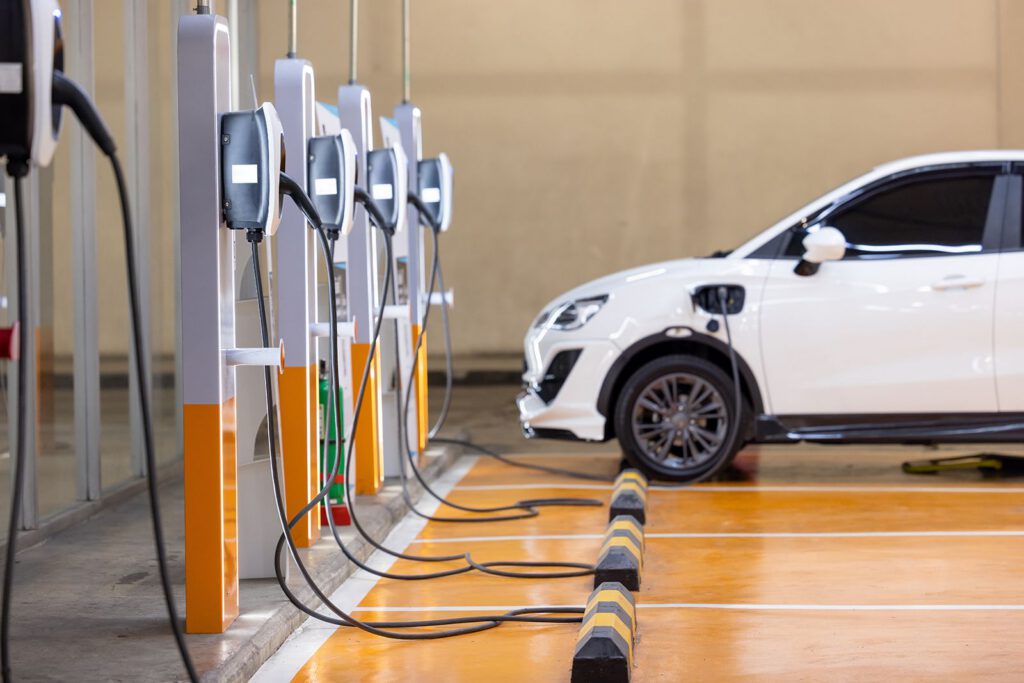
As electric vehicles (EVs) continue to gain traction across India, the focus is shifting from just vehicle adoption to building a robust and reliable charging ecosystem. While high-speed DC chargers often capture attention, it is AC charging solutions that form the backbone of everyday EV infrastructure.
From residential complexes to workplaces and commercial spaces, AC chargers provide a practical, efficient, and scalable way to support the growing number of electric vehicles on the road.
⚡ Understanding AC EV Charging
AC (Alternating Current) chargers are designed to deliver power to electric vehicles over a longer duration, making them ideal for locations where vehicles are parked for extended periods.
Modern AC chargers typically operate in a range of 7.4 kW to 44 kW, supporting both single-phase and three-phase electrical systems. This flexibility allows them to be deployed across a wide variety of environments, from homes to large commercial installations.
Unlike DC fast chargers, where power conversion happens outside the vehicle, AC chargers rely on the vehicle’s onboard charger to convert AC into DC. This makes them more cost-effective and easier to install, especially for widespread use.
🔧 Key Features of Modern AC Charging Solutions
Today’s AC charging systems are no longer just basic plug-in devices. They are equipped with intelligent features that enhance usability, efficiency, and control.
✔ Smart Connectivity & Communication
Modern AC chargers support OCPP 1.6, enabling seamless communication with centralized management systems. In addition, they offer multiple connectivity options such as RFID, Wi-Fi, and GSM, allowing users and operators to interact with the system effortlessly.
✔ Wide Vehicle Compatibility
With Type 2 connectors, AC chargers are compatible with most electric four-wheelers, ensuring universal usability across different EV models.
✔ Flexible Power Configurations
AC chargers are available in multiple configurations to suit different needs:
- 7.4 kW (Single Phase) – Ideal for homes
- 10 kW / 15 kW / 22 kW / 44 kW (Three Phase) – Suitable for commercial and semi-public setups
This flexibility allows businesses and property owners to choose the right solution based on their power availability and usage requirements.
✔ Real-Time Monitoring & Diagnostics
Smart AC chargers can detect and communicate real-time issues such as power fluctuations, connectivity problems, and earthing faults. This ensures transparency and allows users to take immediate action when required.
🏠 Applications of AC Charging Solutions
AC chargers are designed for environments where vehicles are stationary for longer durations. This makes them highly suitable for:
Residential Spaces
- Individual homes
- Apartment complexes
- Gated communities
Commercial & Workplace Environments
- Office buildings
- IT parks
- Corporate campuses
Public & Semi-Public Locations
- Shopping malls
- Hotels and restaurants
- Educational institutions
- Parking facilities
In all these locations, AC charging provides a convenient and efficient way to keep vehicles charged without the need for high-speed infrastructure.
📊 Benefits of AC Charging Infrastructure
✅ Cost-Effective Deployment
AC chargers are significantly more affordable compared to DC fast chargers, both in terms of installation and maintenance. This makes them ideal for large-scale deployment.
✅ Energy Efficiency
Designed for steady and controlled charging, AC solutions ensure optimal energy usage without putting excessive load on the electrical system.
✅ Scalable Infrastructure
AC chargers can be easily installed across multiple locations, allowing businesses and property owners to expand their charging network as demand grows.
✅ Reduced Grid Impact
Since charging happens over a longer duration, AC chargers help distribute energy consumption more evenly, reducing strain on the power grid.
✅ User Convenience
With smart features like RFID authentication and app-based access, users can enjoy a seamless and hassle-free charging experience.
📡 Integration with Smart Charging Ecosystems
One of the most important advancements in AC charging is its integration with centralized management systems (CMS).
These platforms enable operators to:
- Monitor all charging stations in real time
- Track usage patterns and energy consumption
- Detect and resolve faults remotely
- Manage user access and authentication
- Handle billing and payment systems
This level of control transforms AC charging into a data-driven and intelligent infrastructure, rather than just a standalone device.
⚙️ Enhancing Operational Efficiency
For businesses and charging network operators, efficiency is critical. Modern AC charging solutions provide tools that help optimize operations, such as:
- Load management to balance power distribution
- Scheduling charging sessions to reduce peak load
- Data analytics to identify usage trends
- Preventive maintenance through diagnostics
These features not only improve performance but also reduce operational costs in the long run.
🌱 Supporting Sustainable Mobility
AC charging solutions play a crucial role in enabling sustainable transportation. By providing accessible charging options in homes and workplaces, they encourage more people to switch to electric vehicles.
Their energy-efficient design ensures minimal wastage while supporting the broader goal of reducing carbon emissions.
🚀 Why AC Charging Is Critical for EV Adoption
While DC fast chargers are essential for highways and quick top-ups, they cannot replace the importance of AC charging.
AC chargers:
- Enable daily charging convenience
- Reduce dependency on fast-charging infrastructure
- Support mass adoption of EVs
- Provide a cost-effective entry point for businesses
Without a strong AC charging network, scaling EV adoption would be challenging.
🔚 Conclusion
AC charging solutions are the foundation upon which the entire EV ecosystem is built. With their affordability, flexibility, and smart capabilities, they provide a reliable and scalable way to support electric mobility.
As the demand for EVs continues to grow, investing in intelligent AC charging infrastructure will be essential for businesses, residential communities, and public spaces alike.
By combining advanced hardware with smart connectivity and real-time monitoring, modern AC chargers are not just powering vehicles — they are powering the future of transportation.