
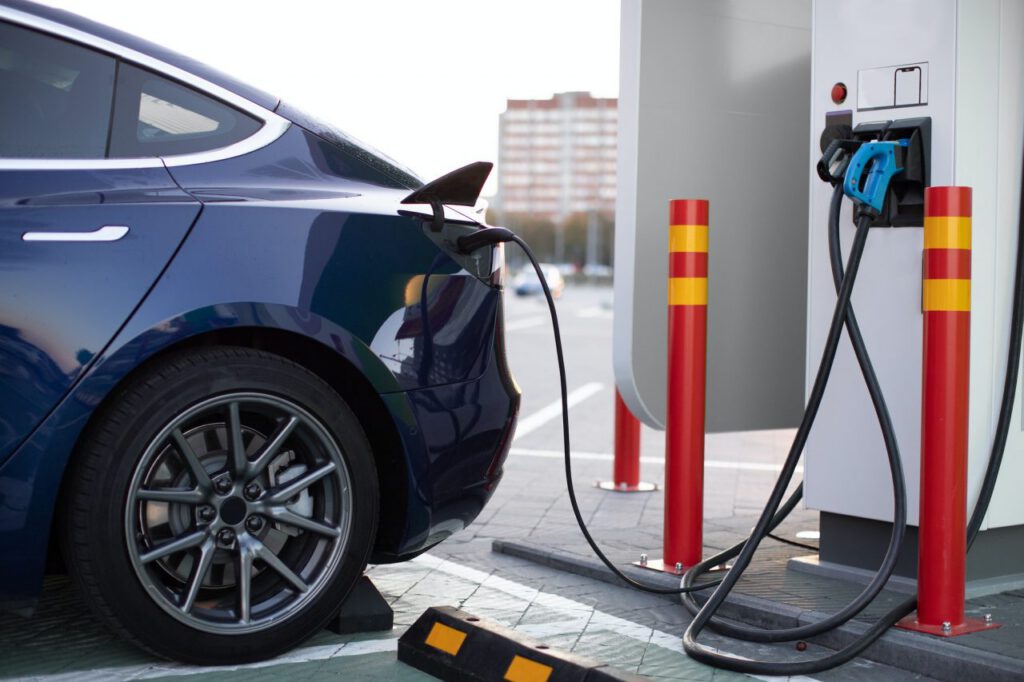
As electric vehicles (EVs) become more mainstream, the need for faster and more efficient charging solutions is increasing rapidly. While AC chargers support everyday charging, DC fast chargers are critical for enabling speed, convenience, and scalability in high-demand environments.
For businesses, fleet operators, and public charging networks, DC fast charging is not just a feature — it is a key driver of adoption, customer satisfaction, and revenue generation.
⚡ What Is DC Fast Charging?
DC (Direct Current) fast chargers deliver power directly to the vehicle’s battery, bypassing the onboard charger. This allows for significantly faster charging compared to AC systems.
Modern DC fast chargers offer high power outputs such as 60 kW dual gun configurations, enabling multiple vehicles to charge simultaneously while reducing waiting time.
These systems are specifically designed for high-traffic and time-sensitive environments, where speed is essential.
🚀 Why DC Fast Charging Matters
The biggest barrier to EV adoption has traditionally been charging time and range anxiety. DC fast chargers address both of these challenges by offering:
- Rapid charging in a short time
- Increased convenience for users
- Higher throughput for charging stations
- Improved utilization of infrastructure
For businesses, this translates into more customers served and better return on investment.
🔧 Key Features of Modern DC Fast Chargers
DC fast chargers today are built with advanced technology to ensure performance, safety, and reliability.
✔ High-Power Output
With configurations like 60 kW dual gun chargers, these systems can charge electric vehicles to a significant level in a short duration.
✔ Dual Gun Capability (CCS2)
Support for CCS2 connectors allows charging of multiple vehicles simultaneously, improving station efficiency.
✔ Dynamic Load Balancing
Load balancing ensures optimal power distribution between charging points, preventing overload and maximizing efficiency.
✔ Multi-Network Connectivity
Modern chargers support Ethernet, Wi-Fi, and 4G connectivity, ensuring continuous communication and system reliability.
✔ Global Standards Compliance
DC chargers are compliant with standards such as:
- ISO 15118 (Plug & Charge)
- DIN SPEC 70121
- OCPP 1.6 (Upgradeable to 2.0.1)
This ensures interoperability and future readiness.
✔ Smart User Interface (HMI)
User-friendly interfaces provide clear instructions and status updates, enhancing the overall charging experience.
📡 Smart Connectivity & Authentication
DC fast chargers are designed to be fully connected systems that enable seamless user interaction.
Authentication Options:
- RFID / NFC cards
- QR code-based access
- App-based control
Connectivity Features:
- Real-time data transmission
- Remote monitoring and control
- Firmware updates (FOTA)
- Data storage and analytics
These features ensure both users and operators have complete visibility and control.
🏢 Applications of DC Fast Charging
DC fast chargers are best suited for locations where quick turnaround and high usage are essential:
- Highways and expressways
- Public charging stations
- Fuel stations transitioning to EV
- Commercial hubs and malls
- Fleet and logistics operations
- Parking operators
In these environments, faster charging directly leads to better customer experience and higher revenue potential.
📊 Business Benefits of DC Fast Charging
💰 Increased Revenue Potential
Faster charging means more vehicles served per day, directly increasing earnings.
🚗 Higher Customer Footfall
Locations offering fast charging attract more EV users, boosting overall business traffic.
⏱ Reduced Waiting Time
Quick charging improves customer satisfaction and reduces congestion at charging stations.
📈 Scalability
With features like dual gun charging and load balancing, infrastructure can handle growing demand efficiently.
⚙️ Integration with Charge Point Management System (CMS)
DC fast chargers are typically integrated with centralized platforms that allow operators to manage their entire network.
Key capabilities include:
- Real-time monitoring of charger status
- Remote diagnostics and fault detection
- Payment and transaction management
- Usage tracking and reporting
- Performance optimization
This integration transforms charging stations into smart, automated, and data-driven assets.
🌱 Supporting the EV Ecosystem
DC fast charging plays a crucial role in building confidence among EV users. By reducing charging time and improving accessibility, it helps:
- Eliminate range anxiety
- Encourage long-distance EV travel
- Support commercial EV operations
- Accelerate overall EV adoption
🚀 Future of DC Fast Charging
As EV adoption grows, DC fast charging technology will continue to evolve with:
- Higher power outputs
- Improved efficiency
- Better integration with smart grids
- Enhanced user experience
Businesses that invest in DC fast charging today are positioning themselves at the forefront of the electric mobility revolution.
🔚 Conclusion
DC fast charging solutions are essential for creating a high-performance EV charging network. With their ability to deliver rapid charging, support multiple users, and integrate with smart systems, they are a critical component of modern infrastructure.
For businesses and operators, DC fast chargers offer not just speed — but scalability, profitability, and future readiness.